Website is under reconstruction
About the Artist
Sculpture and photography are the two primary vectors of Oleg Podberezni’s creative practice
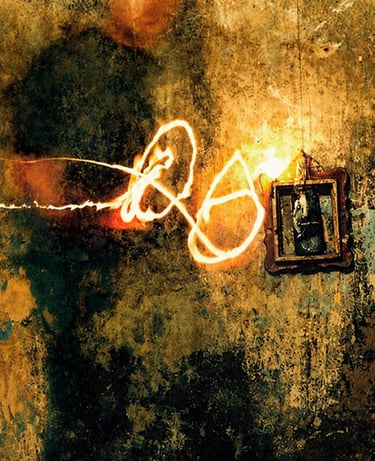
Oleg Podberezni
Stability and movement, the monumental and the ephemeral — these opposing forces continuously flow into one another, shifting with every passing moment. This dynamic interplay lies at the heart of Oleg Podberezni’s work.
Oleg was born in North Ossetia–Alania to a military pilot and a schoolteacher. He had been passionate about sculpture since early childhood, carving wooden figurines by hand.
Oleg Podberezni studied at the V.A. Serov Leningrad Art College and was later admitted to the University of Applied Arts in Vienna.
However, due to personal circumstances, he returned to the USSR — only for the country to dissolve weeks later.
In the early 1990s, Podberezni became a member of the Society of Free Culture in Saint Petersburg. His studio was based at Pushkinskaya 10, a renowned hub of independent art in post-Soviet Saint Petersburg.
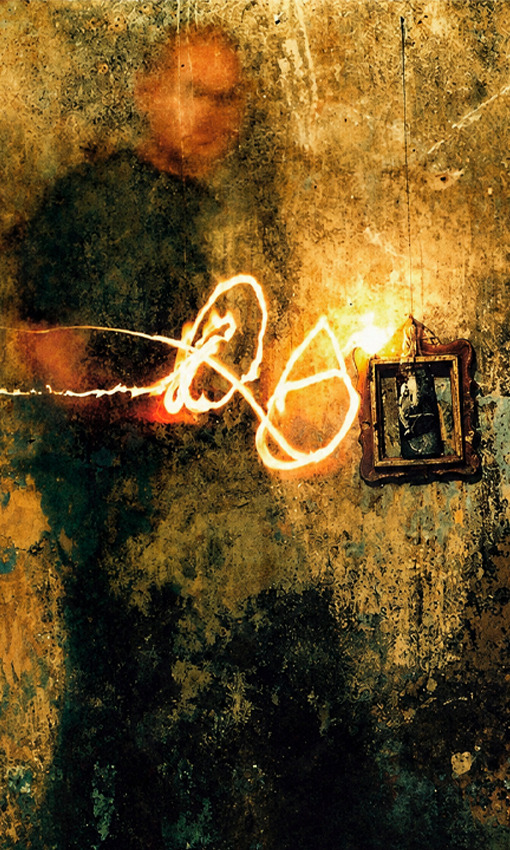
He entered the world of photography amid the cultural and political upheaval following the collapse of the Soviet Union. He collaborated with Saint Petersburg magazines, producing cover shoots for TV personalities, rock and pop musicians, and other cultural figures.
Since the 1990s, portrait photography has been central to his work. He documented the city’s underground art scene, capturing emerging artists, politicians, entrepreneurs, and punk concerts held in former bomb shelters. Saint Petersburg during that era was a city on the edge — chaotic, unpredictable, and alive with possibility. Hierarchies were flattened; vertical and horizontal structures coexisted. In this atmosphere, anyone could rise rapidly — or lose everything just as quickly.
While new political elites invented rituals and rules, and the business world searched for its own language, the underground arts infiltrated clubs and cultural venues. It was in this volatile, creative climate that Podberezni began working with early glossy magazines, refining his photographic techniques, lighting strategies, and visual themes.
His interests extended beyond documentation and portraiture. Oleg Podberezni became deeply engaged with the concept of the noosphere — its fragility, vulnerability, and lack of protection. He questioned the notion of wholeness in a fractured world, and the role of human will in shaping it.
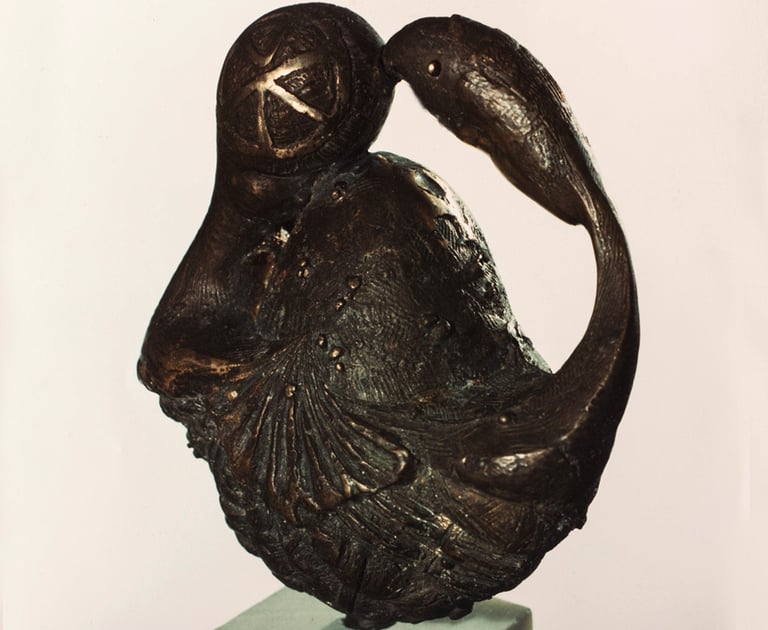
In sculpture, Podberezni transforms his worldview into symbolic form. His practice spans from the fragmented and atomic to the holistic and unified — striving to create objects of force and resonance.
His work is a meditation on the experience of life itself — a reflection on the space between self and other, where everything remains in flux. Ambient environments become illusions cast upon our inner screens. The virtual merges with the real. Photographs are stored within us, as though an invisible archive records all we’ve ever seen.
How many frames are there in this illusory film?
Oleg Podberezni gathers contradictions and fuses them into a singular, unified whole.